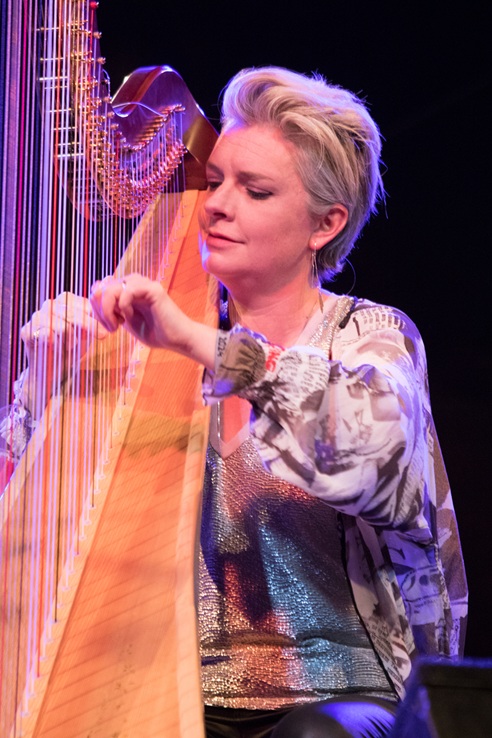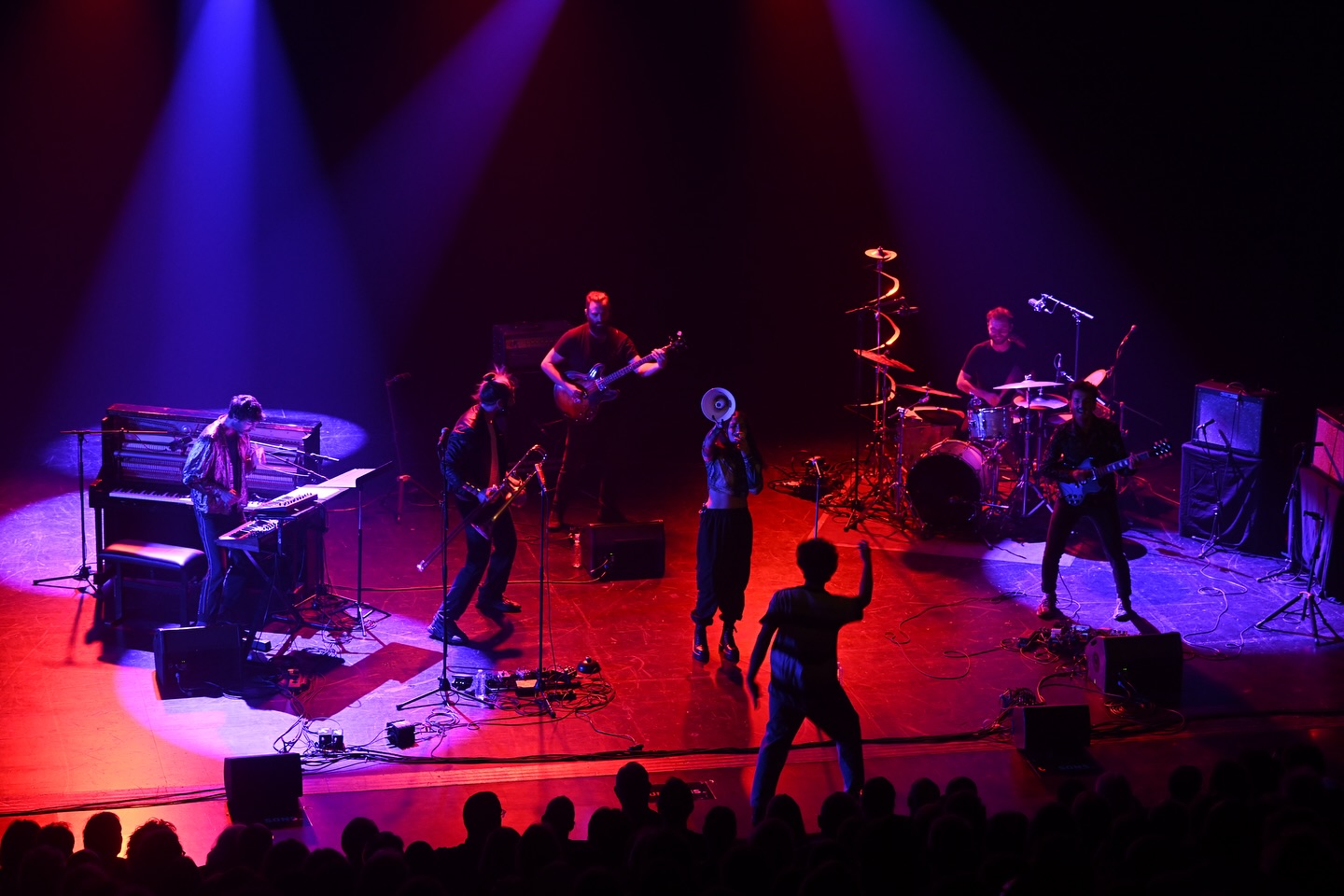
EthnoPort, insights by Daniel Rosenberg

The EthnoPort festival, in Poznań (Poland) was #4 in Transglobal World Music Festival Awards 2024

Daniel Rosenberg shares his main insights

You can also listen to the interview by Daniel with Ms. Bożena Szota, the director of the festival, here.

Basic data:

  • Festival name: Ethnoport (in Poznań, Poland)
  • Global or thematic focus: global folk music
  • Which year is this edition? 17th
  • How many festival-goers have attended this edition? 7,000
  • Website / Festival lineup: https://ethnoport.pl/podstrony/11505-artysci-2024/

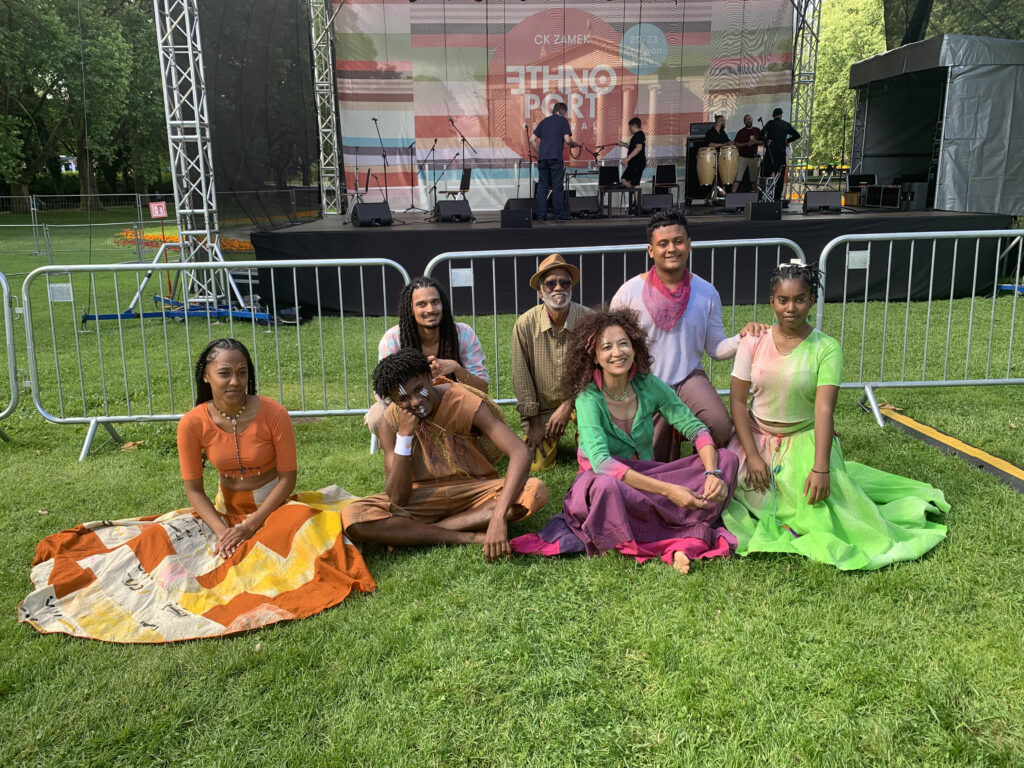
“If we don’t speak about the Bhojpuri language, it can die because of the influence of other languages, like killer languages, like English and French,” Marousia Bouvery, singer from the group Abaim told me after their performance at the Ethnoport Festival in Poznań, Poland. “We’ve been colonized for most of our history,” explained Bouvery, whose group is from the Indian Ocean island of Mauritius.

While I had long known the disastrous consequences of colonisation on Indigenous languages and culture, I had never heard that term, “killer languages,” before – and it is one that is impossible to forget.

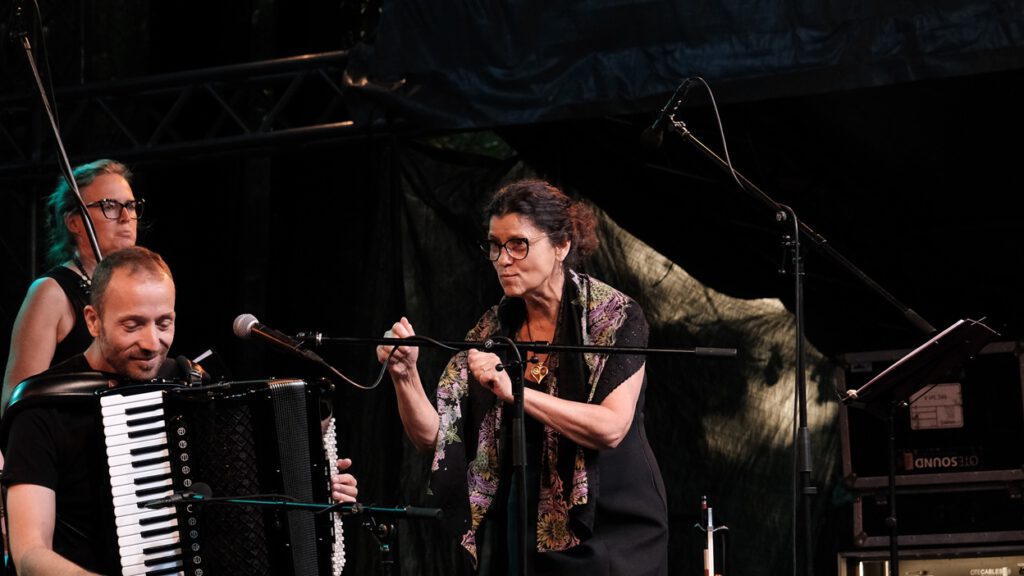
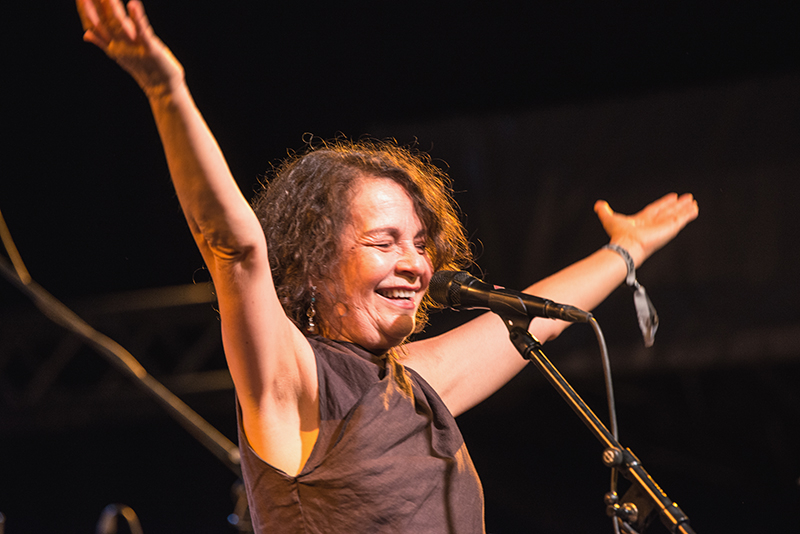
Abaim, after their performance at Ethnoport, photo by Daniel Rosenberg:

Abaim was one of the 17 groups from around the world that were brought to Poznań, a city of 541,000 in Western Poland for this four-day festival held every year in late June. Rather than opting for a few big headliners mixed with lesser known ensembles, artistic director Bożena Szota opted for a stunning lineup of 17 accomplished artists (though not necessarily “world famous”) that each so brilliant, they could be described as co-headliners.

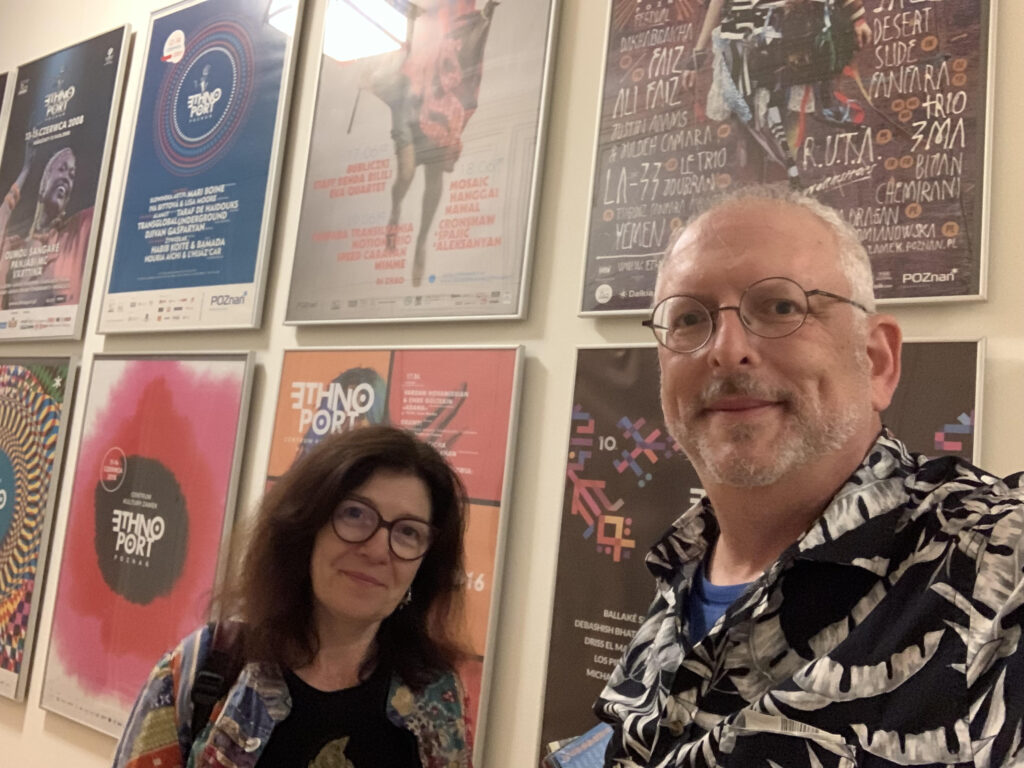
Ethnoport Director Bożena Szota with Daniel Rosenberg:

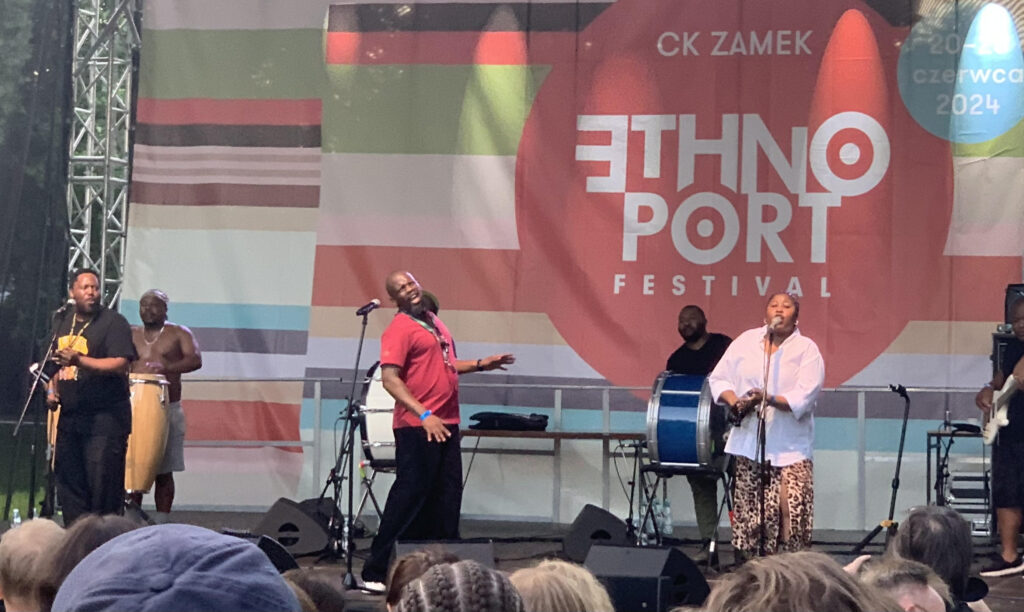
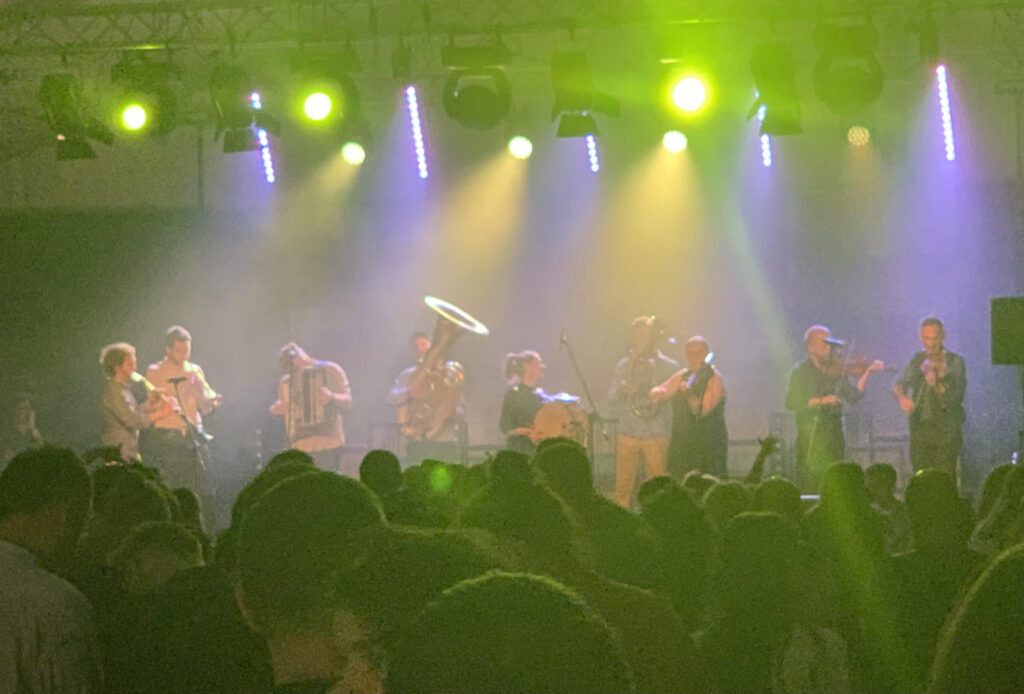
Some of my favourites among this year’s artists were the Afro-psychedelic group from South Africa, Bantu Continua Uhuru Consciousness (BCUC), Tęgie Chłopy – a brass ensemble from the Kielce region of Poland and the aforementioned Abaim from Mauritius.

BCUC performing at Ethnoport, photo by Daniel Rosenberg:

Tęgie Chłopy at Ethnoport, photo by Daniel Rosenberg:

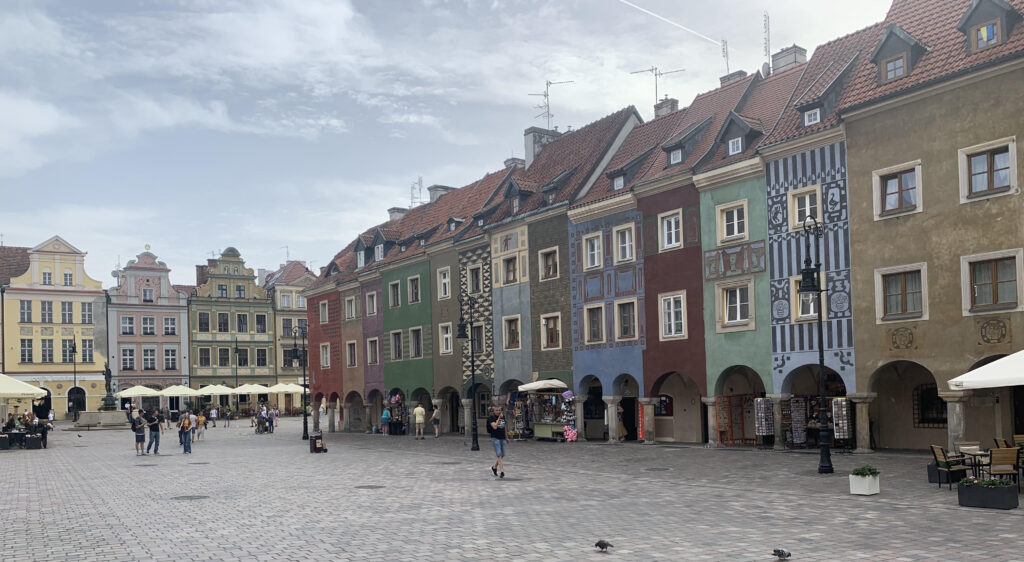
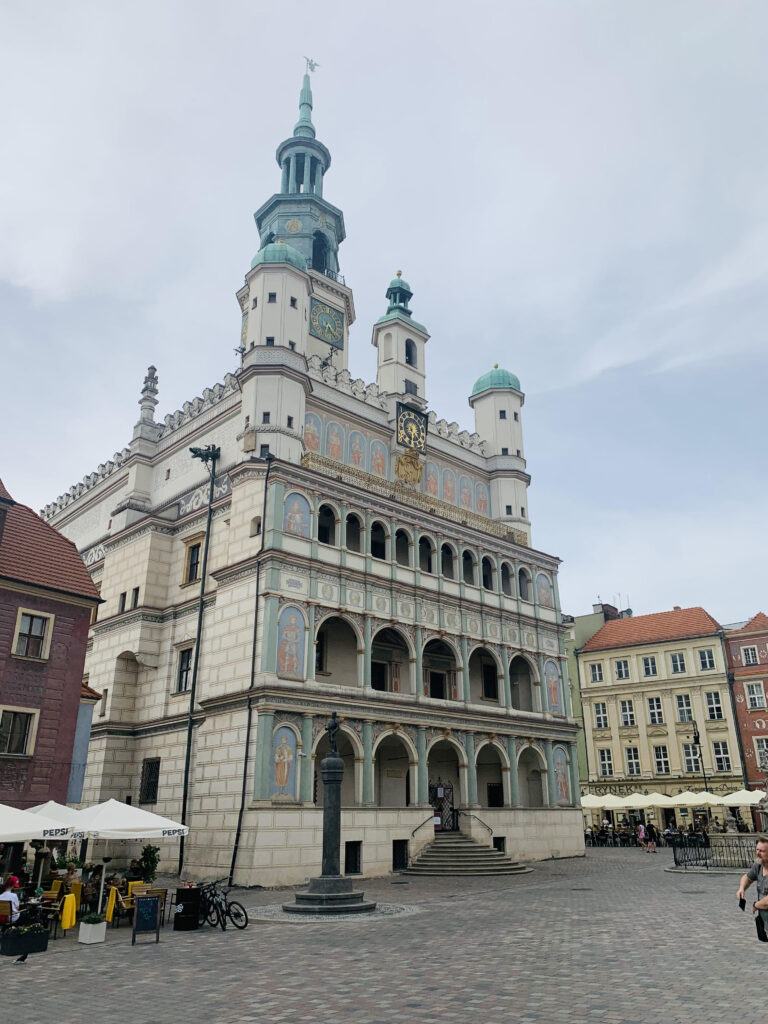
Poznań city centre, photos by Daniel Rosenberg:

While no festival without a massive budget (and a dozen stages) can begin to capture the true diversity of global music going on today in 200 countries across thousands of genres in six continents, Ethnoport succeeds brilliantly. They show that you don’t need a massive budget that features “superstars” of global music. Ethnoport’s aims are to introduce new artists to long time festival goers by attracting some of the best bands from far away places such as Abaim (from Mauritius), Samulnori Hanmac (from South Korea) and Trio Mandili (from Georgia).

With all the stages located within a few blocks, none were more than a 5 minute walk, the logistics were magnificent. The three main stages were located in a castle that’s been converted into a cultural centre, the castle’s courtyard, along with a free concerts at Adam Mickiewicz Park, just a few minutes walk from the castle.

Social responsibility is a key factor in Ethnoport’s programming. Whether it’s featuring ensembles from places under attack, where cultures and populations are devastated by war (including Ukrainian and Palestinian artists) or one of this year’s headliners, Abaim, whose music deals with how climate change is affecting the island of Mauritius, and their efforts to preserve endangered languages – Ethnoport has done a magnificent job on programming, both musically and in terms of social responsibility.

Folk Holidays: A festival with a human dimension held in the shade of a fairytale castle

Folk Holidays festival achieved the position #1 at the Transglobal World Music Festival Awards 2024

This chronicle is by Petr Dorůžka, who was the evaluator of the festival on this edition.

The festival started in 1986, as a semi-underground event 3 years before the fall of the Berlin Wall. At that time, Folk Holidays was focused on singer-songwriters, a protest movement in Czechoslovakia at the time of communist rule. During the following decades, genre boundaries disappeared, the terms “folk” or “world” were infused by traditional genres such as flamenco, blues or Celtic music, and of course, music coming from Asia, Africa and other continents. The festival is held in a small town Náměšť, south of Brno, the regional capital of Moravia, east Czechia.

Michal Schmidt (*1960) became the program director in 1998. Since then, he has been building the festival identity for a quarter of a century.

In this period, Folk Holidays played a crucial role for the Czech audiences, discovering foreign cultures, new musical genres. That was strongly needed, as the country is landlocked, never had any colonies, and there are no strong immigrant communities. The festival takes place in the castle park in Náměšť-nad-Oslavou in the last days of July and early August. The program lasts a full 8 days, from Saturday to Saturday. The evening concerts are complemented by a varied selection of daily workshops and courses, covering both music, art, and practical disciplines. Some examples: tango and milonga dancing, instrument building, jewellery crafts.

For decades the Folk Holidays keep the format of an intimate festival, with 800-1300 people at a concert, moderately filling the park in front of the Náměšť castle. Non-mainstream programming actually regulates the size of the crowd, so it’s the more adventurous section of the listeners who decide to spend their holidays in Náměšť.

With a small festival and limited budget, it is not easy to bring world-class musicians like Sona Jobarteh, Sam Lee or Eliza Carthy to the Moravian countryside, but Michal Schmidt developed some efficient tricks: “From Monday to Thursday, bands on tour are less busy and cheaper than on weekends, when they earn higher fees at big festivals. The second trick is artist-led workshops. We invite musicians to spend up to 4 days at the festival. And the third trick is references. The Folk Holidays festival has been well received by many musicians and agencies over the years, and they pass it on.”

One fine example was set by the great Welsh harp player Catrin Finch. During the “Harp Summit” concert in Náměšť in 2019, she was joined by the Senegalese kora player Seckou Keita and Colombian harp virtuoso Edmar Castañeda. And it was his breathtaking harp solos that inspired a new song, Dual Rising, recorded by Catrin Finch & Seckou Keita on their next album, Echo.

While the festival still keeps it’s intimate atmosphere, it is also expanding without losing its spark. This may sound like a contradiction, so I’ll try to explain. To fill the intermissions on the main stage, a small tent in the park is used to present yet unknown bands or children’s theatre. This year was different, thanks to Dis is Markéta, a highly promising band from Slovakia. For many visitors, their set was one of the program highlights. So the stage considered as “secondary” became main point of interest for the first time.

Here is a short survey of other main attractions of the 2024 edition:

Ensemble B11 (Venezuela): The combination of 5 female singers and 4 singer-instrumentalists created a very flexible and ever-changing core. The show started with a cappella singing, soon switched to sophisticated arrangements with bass guitar and cuatro, a distinctive instrument related to guitar, and ended up in a high-energy gunfire of Afro-Latin percussion. The highlight of this part was the horizontal cumaco drum. One player sits on it and beats the membrane with mallets. During the piece, he is subtly joined by another player called a “palitero”, squatting behind him, pounding the body of the drum, made from the massive hollow trunk of an avocado tree.

Iva Bittová & Pavel Fischer & Jakub Jedlinský & Babačka (CZ): Bittová is one of the most sought after Czech artists: violin player, singer, improviser, and expert on traditional styles of Mid-Eastern Europe. With musicians playing accordion, violin and natural voices of the multi-generation mixed choir Bittová formed a village not far from Náměšť, she took the audience on a time machine tour. The destination was a long forgotten era, when making music at home or with friends was a natural part of the daily lifestyle in countryside.

Picture of Iva Bittová & Pavel Fischer & Jakub Jedlinský & Babačka by Vojmír Blazek: 

Catrin Finch & Aoife Ní Bhriain (Wales-Ireland): Catrin Finch is a regular performer in Náměšť, but each time with a different line-up. The violin virtuoso Aoife Ni Bhriain draws both from classical music and Irish tunes. The result was an adventurous yet fragile search for common roots of genres we now take as something fixed and frozen.

Picture of Catrin Finch by Barka Fabiánová:

Lucia Pulido (Colombia-Mexico): One of the most original female voices in Latin America. She draws from the vocal language of the herders in the Colombian plains, but also from the vast area of Latin American melodies and from experimental music. On stage, her band was equally innovative, with a surprising array of colors and textures. New Zealand-born Misha Marks switched between latarra, an oil can guitar, tuba and baritone horn. This very special instrument, now used by Balkan brass bands, was a part of Austrian military bands, and entered Mexico thanks to Emperor Maximilian, the younger brother of the Habsburg monarch Franz Joseph I, who ruled the Náměšť region and Czech countries 150 years ago. Ulises Martínez added some very special licks on the violin, and also played guitar and it’s 4stringed Mexican cousin Leona. The repertoire was a celebration of common ties between Mexico and Colombia, including rancheras and other genres that have been travelling between both countries during the past centuries. And of course, Lucia Pulido’s voice was filled with such a huge range of emotions you can only find in Spanish language songs. If you listened deeply enough, in her precise work with rhythmical flow and well planned micro stops you could hear the phrasing of the one and only Chavela Vargas.

Picture of Lucia Pulido by Ivan Prokop:

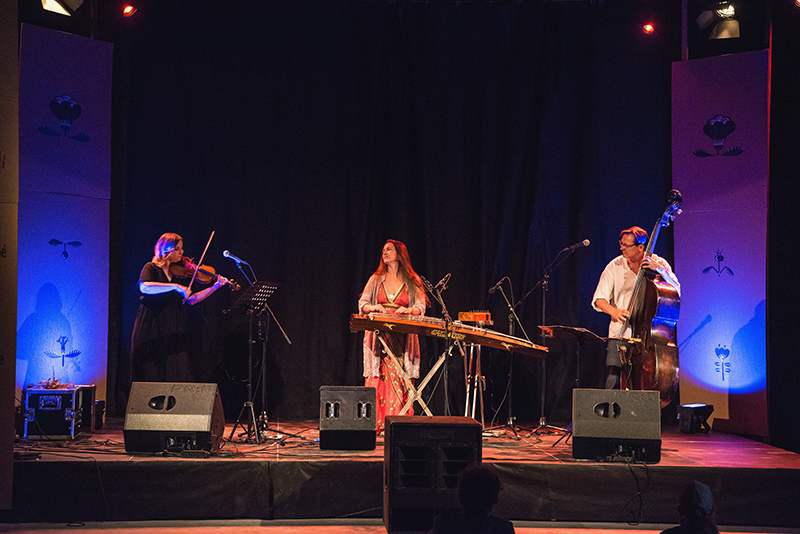
Barbora Xu (Cz) is the stage name of Barbora Šilhánová. Her multifaceted music draws from 3 different sources: the Finnish kantele tradition, the music of the Chinese zither guzheng and the polyphonies of aboriginal inhabitants of Taiwan, the Bunun people, where Barbora spent one year on ethnographical research. Because guzheng and kantele are part of the zither family, mastering both instruments helps Barbora to move freely between Chinese and Finnish traditions and inventing new approaches to the instrument. And that was exactly the case of her night concert, with double bass and violin accompaniment. The result was mostly slow and quiet songs, embellished with magic details, but always refreshing and never following a routine.

Picture of Barbora Xu by Ivan Prokop:

Jeonju International Sori Festival 2024: A Deep-Rooted Celebration of Korean Music with Global Vision

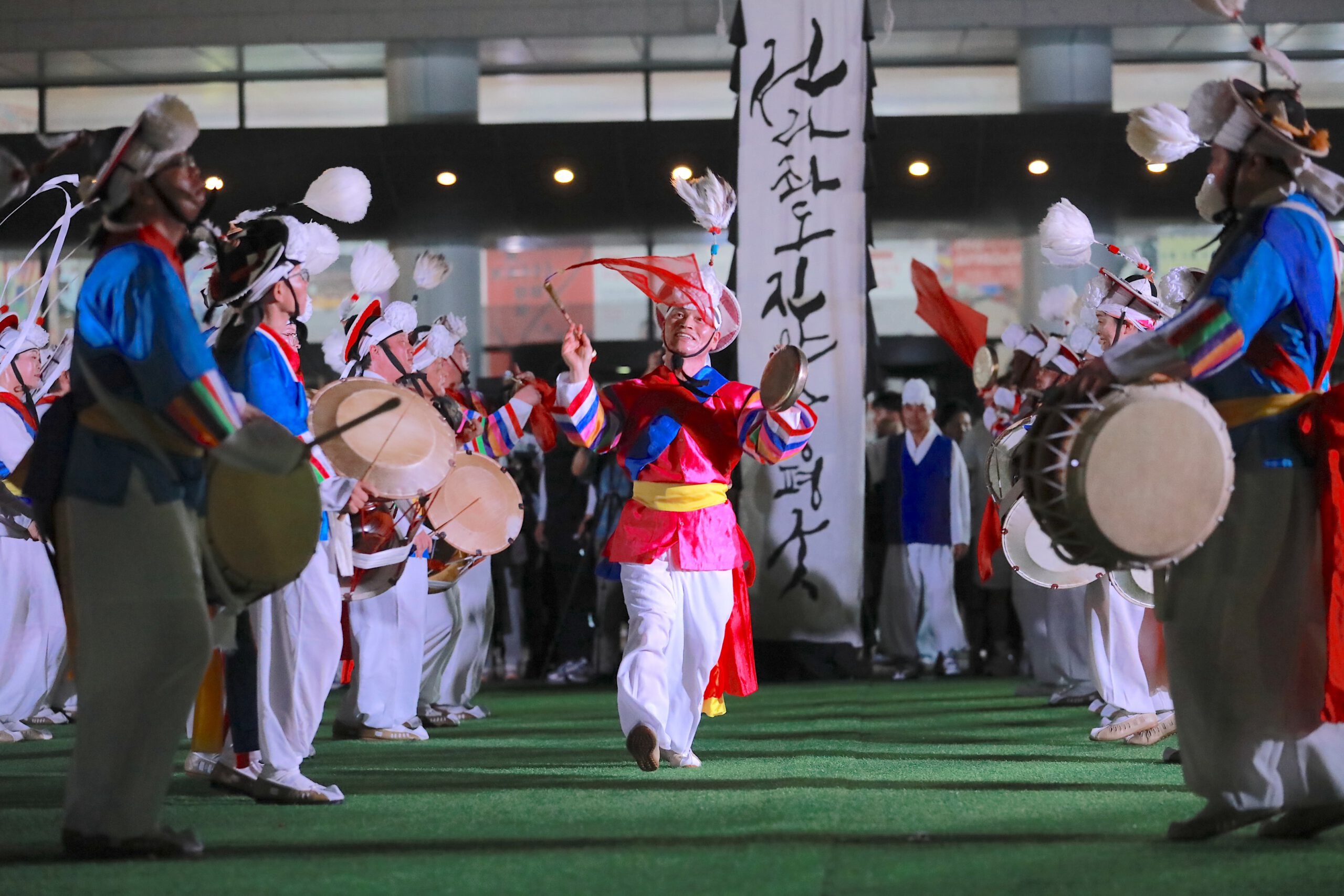
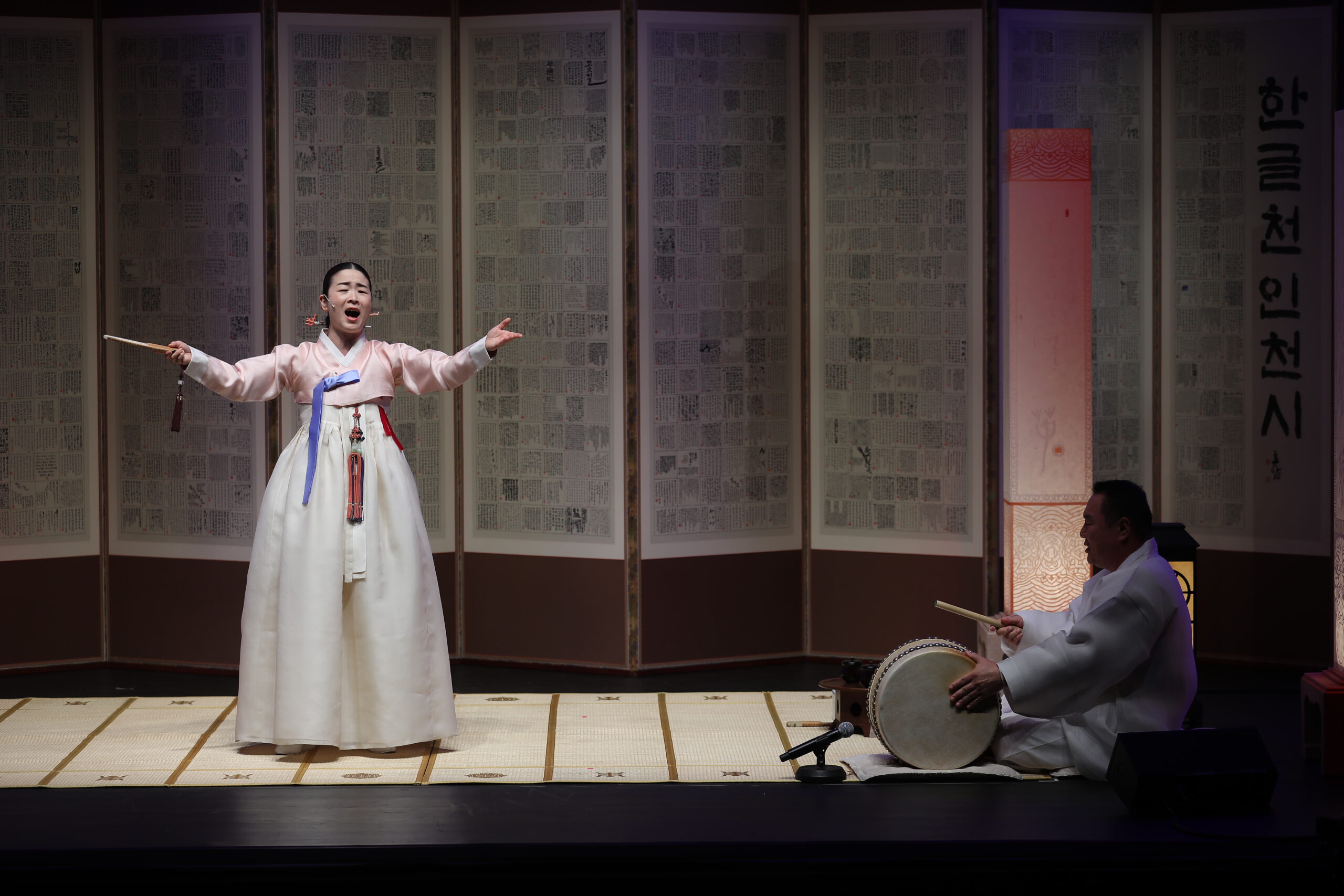
Attending the Jeonju International Sori Festival is a guaranteed plunge into the deepest and most thrilling dimensions of Korean musical traditions. For me, this year marked the second opportunity to do so, allowing me once again to enjoy a truly unique art form — pansori — which always holds a prominent place in the programme, with daily performances by outstanding artists. Equally striking are the explosive street shows by the large, thunderous nongak troupes, a form deeply tied to rural communities. Refined performances in the instrumental sanjo style were also an interesting part of the programme.

Jinan Jungpyeong Gut at Jeonju International Sori Festival 2024. Photo: Jeonju International Sori Festival

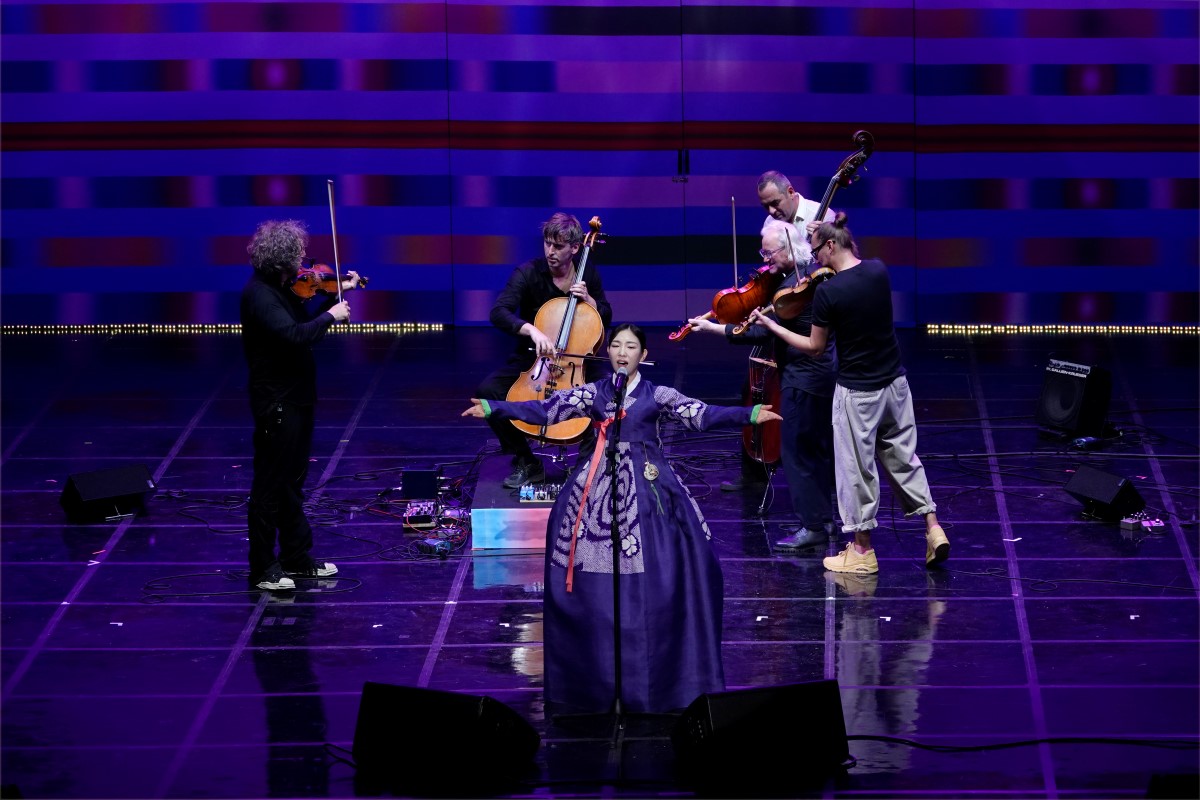
With strong support from the local public, the festival also holds great potential for attracting international visitors, thanks to the originality and high calibre of its musical expressions. It likewise offers Korean audiences the opportunity to engage with other musical cultures — such as Polish and Indonesian — through performances by Vołosi, Nusantara Beat, and other international artists and ensembles.

During the festival’s 23rd edition, held from 14 to 18 August 2024, I had the opportunity to speak with the new festival’s director, Hee-sun Kim, about the spirit and vision behind this exceptional cultural gathering. Our conversation shed light on the festival’s identity, its evolving goals, and the meaningful role it plays in connecting tradition with innovation.

Jeonju International Sori Festival (JISF) reaffirmed once again its place as one of South Korea’s premier cultural events, devoted to traditional music and performing arts. Led by its new director, Hee-sun Kim, the festival took bold strides in blending Korea’s rich heritage with contemporary expressions and international collaboration — all under the banner of its guiding theme: “Local Prism: Enlarging Perspective.”

“From very deep tradition to very contemporary performing arts”

Originally launched in 2001, the Sori Festival has developed a distinctive character. “Actually, Jeonju International Sori Festival began in 2001… this is our 23rd edition,” explained Kim, highlighting its longevity and evolution. Unlike other festivals in Korea that might approach traditional music from a purely local or folkloric angle, JISF seeks to elevate these forms to the realm of high art. “This is very special, unique — to focus on performing arts — and we want to bring more audience who really respect traditional arts,” Kim said.

The 2024 edition was shaped around a key idea: reinterpreting and expanding the view of tradition. “This year’s kind of keyword was ‘local prism enlarging perspective.’ So, from the very, very deep tradition to the very contemporary performing arts — that is our focus,” she stated. This vision guided both the programming and the broader mission of the festival.

Lee Jaram at Jeonju International Sori Festival 2024. Photo: Jeonju International Sori Festival

A powerful start and a resonant closing

The opening concert offered a symbolic and artistic tribute to the region’s deep cultural legacy. “Our opening concert was a stage production focused on farmers’ fan music, which is from this province,” Kim explained, referring to nongak, a traditional percussion-based music deeply rooted in Korean rural life. The performance also marked an important milestone: the 10th anniversary of nongak’s designation as UNESCO Intangible Cultural Heritage. “We were trying to celebrate how this local performing art became more worldly renowned — that is part of it,” Kim said.

As for the closing concert, the spotlight was reserved for pansori, a genre that lies at the heart of the festival’s identity, featuring celebrated artists Cho Sanghyeon and Shin Yeonghee. “Our closing concert will be focused on pansori, which is our own major genre of the Sori Festival. The term sori comes from pansori,” Kim emphasized. This traditional Korean narrative singing combines music, storytelling, and theatrical performance into a powerful solo art form.

Vołosi & Chae Suhyeon at Jeonju International Sori Festival 2024. Photo: Jeonju International Sori Festival

Bridging generations and cultures

Beyond performances, the Sori Festival operates with a broader cultural mission: education, preservation, and intergenerational dialogue. “We want to educate our audience and also share the value of traditional performing arts,” Kim said. “At the same time, we focus on how we can promote or support the younger generations of performers… and we are trying to get more younger audiences to come to the festival.”

This dual focus — respecting heritage and investing in the future — defines the spirit of the event. “We respect tradition, and we also respect the traditions of other peoples around the world,” Kim said, reinforcing the festival’s openness to global collaboration and mutual learning.

Rooted in Jeonju, at the heart of Korea’s cultural heritage

The city of Jeonju is more than just a backdrop; it’s the beating heart of the festival’s mission. “This city — Jeonju — is known for being the home of traditional performing arts. That is really, really an important mission for us: to do this festival here,” Kim explained. The location serves as both a symbolic and practical foundation for celebrating Korea’s cultural heritage.

As the 2024 edition drew to a close, the Jeonju International Sori Festival once again proved its ability to honour the past while looking boldly into the future — a place where tradition is not only preserved, but reimagined and shared with the world.

Author: Juan Antonio Vázquez, Transglobal World Music Chart co-founder, co-administrator and member; Mundofonías and Mil Mundos presenter.

Festival Arabesques 2024: Amplifying Arab Voices, Heritage and Hope through the Arts

From 10 to 22 September 2024, the city of Montpellier, in Southern France, once again became a vibrant stage for Arab cultures during the 19th edition of the Festival Arabesques. Over nearly two weeks, audiences experienced a powerful convergence of tradition and modernity, activism and art, joy and resilience. Created by Habib Dechraoui in 2006, Arabesques remains the largest European festival dedicated exclusively to the arts of the Arab world — and this year, it deepened its mission with moving tributes and urgent voices.

“Arabesques is a festival entirely dedicated to the arts of the Arab world,” said Dechraoui, founder and artistic director. “Its goal is to bring people together and to offer a more accurate image of Arab culture — showing that it’s diverse, ancient, and constantly evolving. When we speak of Arab culture, we must really speak of Arab cultures, because the geographic and cultural diversity is immense, from the Maghreb to the Mashrek, from Sicily to Spain.”

Arabesques is, as Dechraoui insists, about breaking down monolithic views. While many associate Arab traditions only with folklore or ancient heritage, the festival reveals a far richer reality — a living cultural scene influenced by immigration, colonisation, resistance, and creativity. “There’s a traditional scene that has reinvented itself,” he explained. “It draws from today’s codes, today’s sounds. It’s a culture shaped by a long history — of conquest, of being conquered, of diaspora. That mixture gives rise to something extremely rich and unique.”

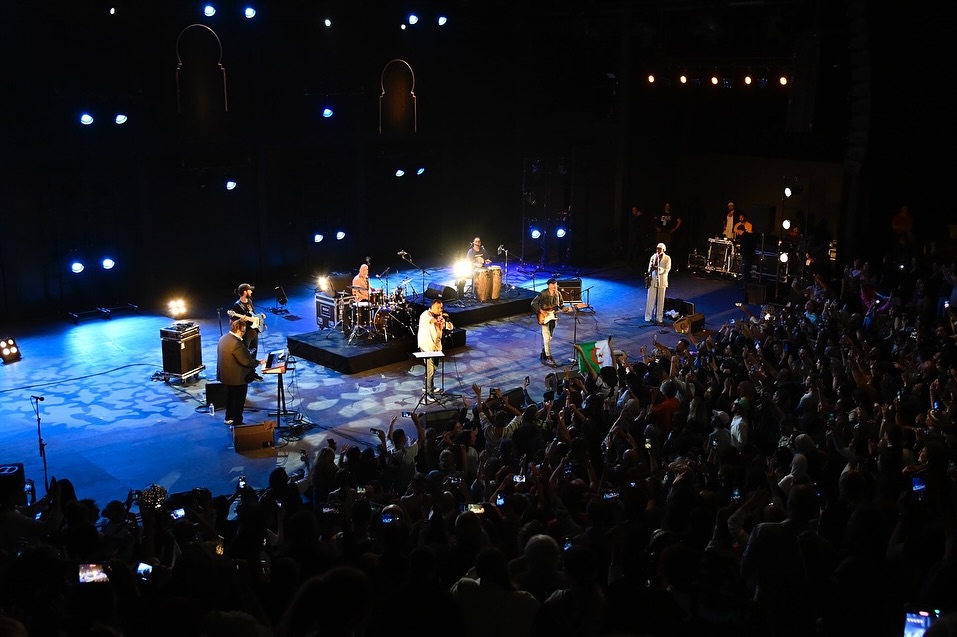
Raïna Raï at Arabesques 2024. Photo: Festival Arabesques

Spotlight on Palestine: Art as Refuge and Resistance

This year’s edition was marked by a special thematic focus on Palestine, a territory under the watchful eye of the world, ever since the ongoing large-scale attacks and massacres against the population of Gaza began. Titled “Once Upon a Time in Palestine”, the programme dedicated an entire day to showcasing the resilience and creativity of the Palestinian artistic scene.

“This theme was particularly close to our hearts,” Dechraoui shared. “The Palestinian scene has always held an important place at Arabesques, just like the Lebanese or Syrian scenes, but this year it was crucial to amplify those voices. I go to Palestine every year, and we maintain close ties with its artists. Arabesques offered a space of free expression for many of them who struggle to perform elsewhere.”

One of the most poignant moments came with Tareq Abboushi, who offered an evocative musical journey blending traditional Palestinian repertoire with the emotional weight of recent events in Gaza. The festival also welcomed Rasha Nahas, whose performance combined indie rock with poetry and protest.

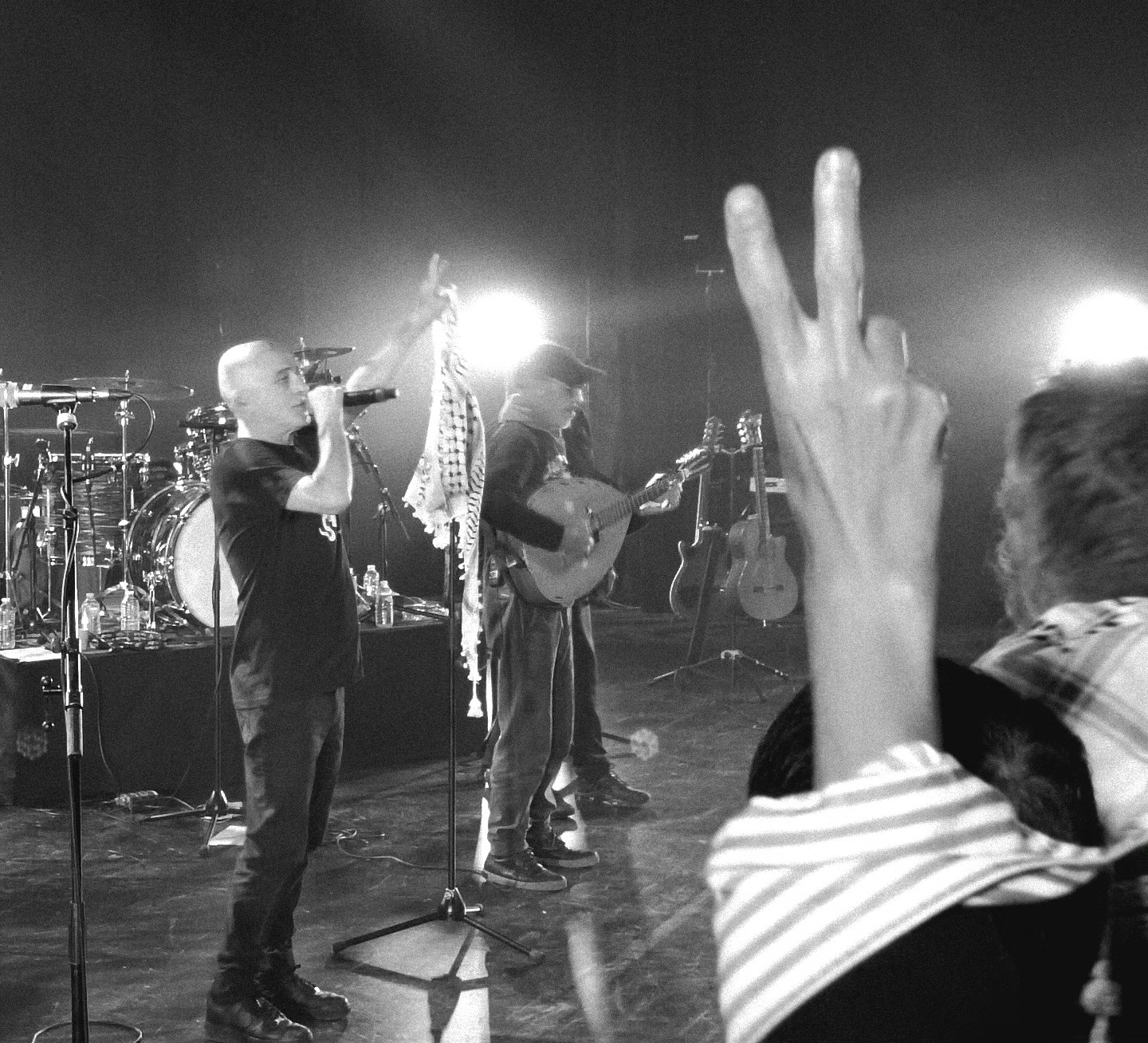
Mouss et Hakim at Arabesques 2024. Photo: Juan Antonio Vázquez

Women Leading the Stage

Another defining thread of Arabesques 2024 was the strong presence of Arab women artists. While not explicitly framed as a theme, the inclusion of female performers organically shaped the festival’s atmosphere.

“We wanted to highlight the strong voices of Arab women,” said Dechraoui. “Artists like Kamilya Jubran, Yousra Mansour from Bab L’Blues, Climène Zarkan from Sarāb, Souad Massi and Ghalia Benali were central to the programme. This wasn’t by design at first — it just happened naturally. But it worked beautifully, and the audience really felt the energy.”

These artists didn’t just perform — they told stories of identity, exile, and resistance. From Massi’s poignant ballads to Sarab’s jazz-inflected political lyricism, their performances underlined that Arab women are not only preserving heritage but pushing it into new sonic and ideological frontiers.

Sarāb at Arabesques 2024. Photo: Festival Arabesques

A Festival that Grows with Its Audience

Now nearly two decades old, Arabesques has grown into a true cultural phenomenon. What started as a bold experiment is now a celebrated international event, drawing a loyal and growing public.

“From the very beginning, I believed in the future of this festival,” Dechraoui reflected. “I believed it would bring people together, and I wasn’t wrong. Today, Arabesques fills a real gap in France — we have a rich Arab cultural scene, and this festival gives it the visibility it deserves.”

A few years ago, a study with a CNRS researcher revealed that while around 60% of the audience is local, a significant 40% travels from across France and even abroad. “We even met people who have been coming from New Caledonia for several years,” he recalled proudly. “Some plan their entire holidays around the festival.”

Beyond Music: A Multidisciplinary Encounter

Arabesques is not only about concerts. The festival prides itself on offering a multidisciplinary programme that includes cinema screenings, art exhibitions, panel discussions, children’s activities, and cultural workshops. It’s designed as a family-friendly, inclusive space where generations can meet and dialogue.

This diversity of formats also reflects the layered realities of Arab identities. As Dechraoui puts it, “Arabesques is not just a festival — it’s a space of encounter, of debate, of storytelling. It’s about showcasing an ever-moving culture that remains rooted, yet vibrant.”

Intense and Emotional Connections

Attending the Arabesques Festival for the first time allowed me to truly feel the energy of groups that, from either shore of the Mediterranean, maintain an intense and emotional bond with a broad audience. This was especially evident during the concert by Mouss et Hakim, who, since the 1990s, have been driving meaningful projects from Toulouse such as Zebda and Motivés. Their performance offered a moving journey through vintage songs that once resonated deeply with North African immigrant communities in France decades ago. That same powerful connection was felt during the concert by the long-running Algerian raï band Raïna Raï, whose celebrated and much-sung repertoire stirred strong emotions among the crowd.

And now, in 2025, the 20th edition of the Arabesques Festival is fast approaching — what surprises will it bring?

Author: Juan Antonio Vázquez, Transglobal World Music Chart co-founder, co-administrator and member; Mundofonías and Mil Mundos presenter.

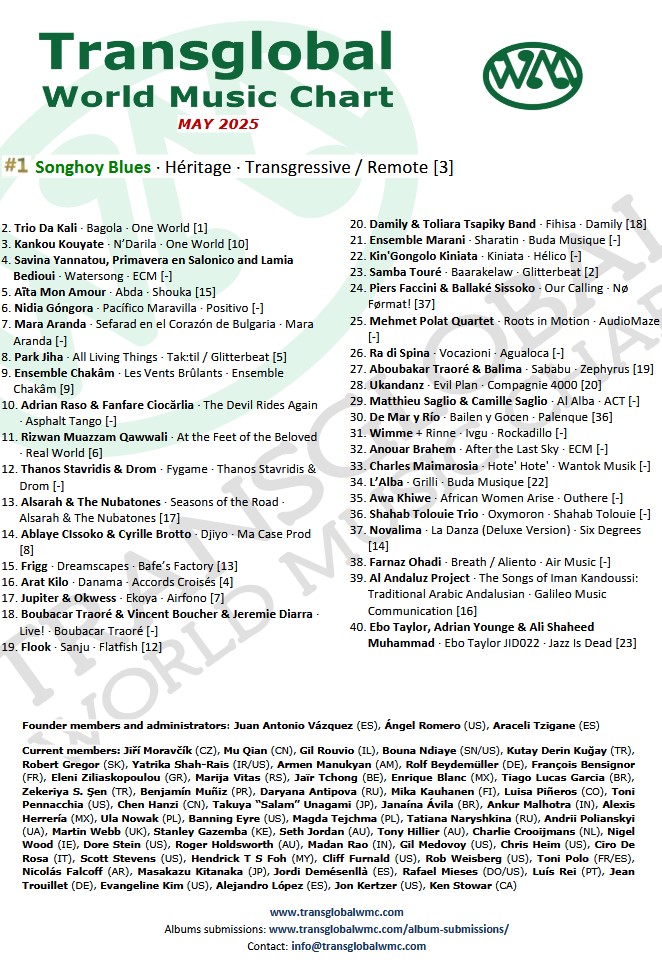
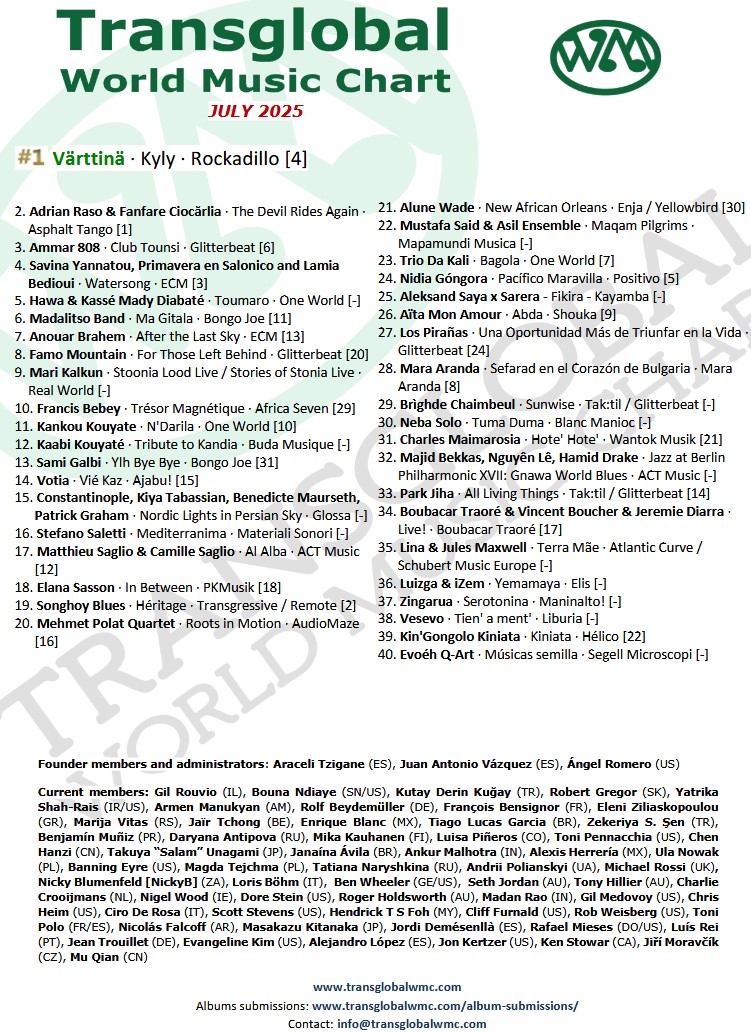
May 2025 Chart

twmc1

1. Songhoy Blues · Héritage · Transgressive / Remote [3]


2. Trio Da Kali · Bagola · One World [1]
3. Kankou Kouyate · N’Darila · One World [10]
4. Savina Yannatou, Primavera en Salonico and Lamia Bedioui · Watersong · ECM [-]
5. Aïta Mon Amour · Abda · Shouka [15]
6. Nidia Góngora · Pacífico Maravilla · Positivo [-]
7. Mara Aranda · Sefarad en el Corazón de Bulgaria · Mara Aranda [-]
8. Park Jiha · All Living Things · Tak:til / Glitterbeat [5]
9. Ensemble Chakâm · Les Vents Brûlants · Ensemble Chakâm [9]
10. Adrian Raso & Fanfare Ciocărlia · The Devil Rides Again · Asphalt Tango [-]

11. Rizwan Muazzam Qawwali · At the Feet of the Beloved · Real World [6]
12. Thanos Stavridis & Drom · Fygame · Thanos Stavridis & Drom [-]
13. Alsarah & The Nubatones · Seasons of the Road · Alsarah & The Nubatones [17]
14. Ablaye CIssoko & Cyrille Brotto · Djiyo · Ma Case Prod [8]
15. Frigg · Dreamscapes · Bafe’s Factory [13]
16. Arat Kilo · Danama · Accords Croisés [4]
17. Jupiter & Okwess · Ekoya · Airfono [7]
18. Boubacar Traoré & Vincent Boucher & Jeremie Diarra · Live! · Boubacar Traoré [-]
19. Flook · Sanju · Flatfish [12]
20. Damily & Toliara Tsapiky Band · Fihisa · Damily [18]

21. Ensemble Marani · Sharatin · Buda Musique [-]
22. Kin’Gongolo Kiniata · Kiniata · Hélico [-]
23. Samba Touré · Baarakelaw · Glitterbeat [2]
24. Piers Faccini & Ballaké Sissoko · Our Calling · Nø Førmat! [37]
25. Mehmet Polat Quartet · Roots in Motion · AudioMaze [-]
26. Ra di Spina · Vocazioni · Agualoca [-]
27. Aboubakar Traoré & Balima · Sababu · Zephyrus [19]
28. Ukandanz · Evil Plan · Compagnie 4000 [20]
29. Matthieu Saglio & Camille Saglio · Al Alba · ACT [-]
30. De Mar y Río · Bailen y Gocen · Palenque [36]

31. Wimme + Rinne · Ivgu · Rockadillo [-]
32. Anouar Brahem · After the Last Sky · ECM [-]
33. Charles Maimarosia · Hote’ Hote’ · Wantok Musik [-]
34. L’Alba · Grilli · Buda Musique [22]
35. Awa Khiwe · African Women Arise · Outhere [-]
36. Shahab Tolouie Trio · Oxymoron · Shahab Tolouie [-]
37. Novalima · La Danza (Deluxe Version) · Six Degrees [14]
38. Farnaz Ohadi · Breath / Aliento · Air Music [-]
39. Al Andaluz Project · The Songs of Iman Kandoussi: Traditional Arabic Andalusian · Galileo Music Communication [16]
40. Ebo Taylor, Adrian Younge & Ali Shaheed Muhammad · Ebo Taylor JID022 · Jazz Is Dead [23]

Download the chart as a PDF file

Founder members and administrators: Juan Antonio Vázquez (ES), Ángel Romero (US), Araceli Tzigane (ES)

Members: Jiří Moravčík (CZ), Mu Qian (CN), Gil Rouvio (IL), Bouna Ndiaye (SN/US), Kutay Derin Kuğay (TR), Robert Gregor (SK), Yatrika Shah-Rais (IR/US), Armen Manukyan (AM), Rolf Beydemüller (DE), François Bensignor (FR), Eleni Ziliaskopoulou (GR), Marija Vitas (RS), Jaïr Tchong (BE), Enrique Blanc (MX), Tiago Lucas Garcia (BR), Zekeriya S. Şen (TR), Benjamín Muñiz (PR), Daryana Antipova (RU), Mika Kauhanen (FI), Luisa Piñeros (CO), Toni Pennacchia (US), Chen Hanzi (CN), Takuya “Salam” Unagami (JP), Janaína Ávila (BR), Ankur Malhotra (IN), Alexis Herrería (MX), Ula Nowak (PL), Banning Eyre (US), Magda Tejchma (PL), Tatiana Naryshkina (RU), Andrii Polianskyi (UA), Michael Rossi (UK), Seth Jordan (AU), Tony Hillier (AU), Charlie Crooijmans (NL), Nigel Wood (IE), Dore Stein (US), Roger Holdsworth (AU), Madan Rao (IN), Gil Medovoy (US), Chris Heim (US), Ciro De Rosa (IT), Scott Stevens (US), Hendrick T S Foh (MY), Cliff Furnald (US), Rob Weisberg (US), Toni Polo (FR/ES), Nicolás Falcoff (AR), Masakazu Kitanaka (JP), Jordi Demésenllà (ES), Rafael Mieses (DO/US), Luís Rei (PT), Jean Trouillet (DE), Evangeline Kim (US), Alejandro López (ES), Jon Kertzer (US), Ken Stowar (CA)

The information for each album is displayed as follows:
#. Artist · Album Title · Label/Publisher… [Previous month’s chart position]
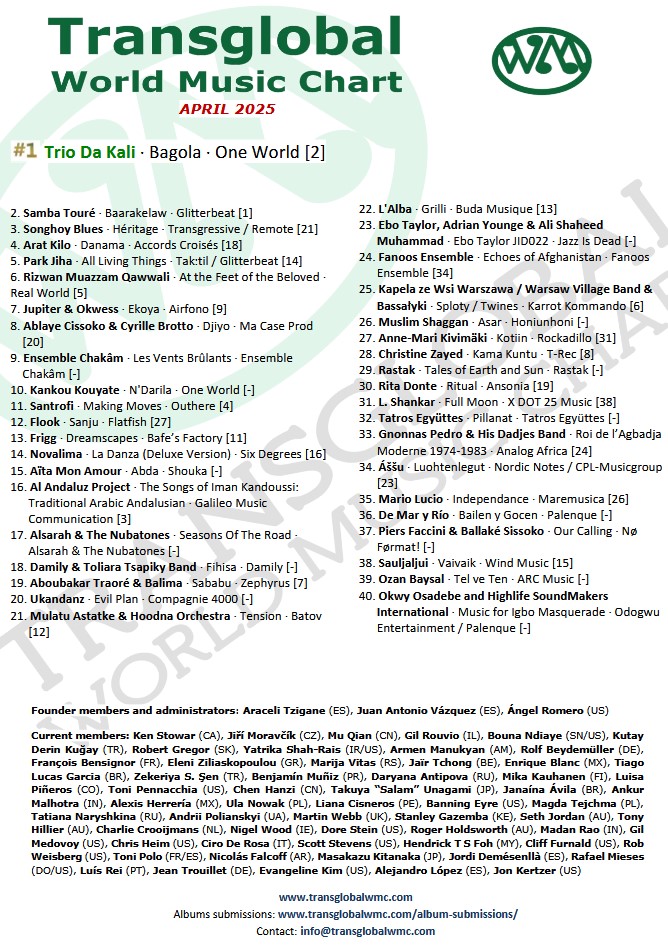
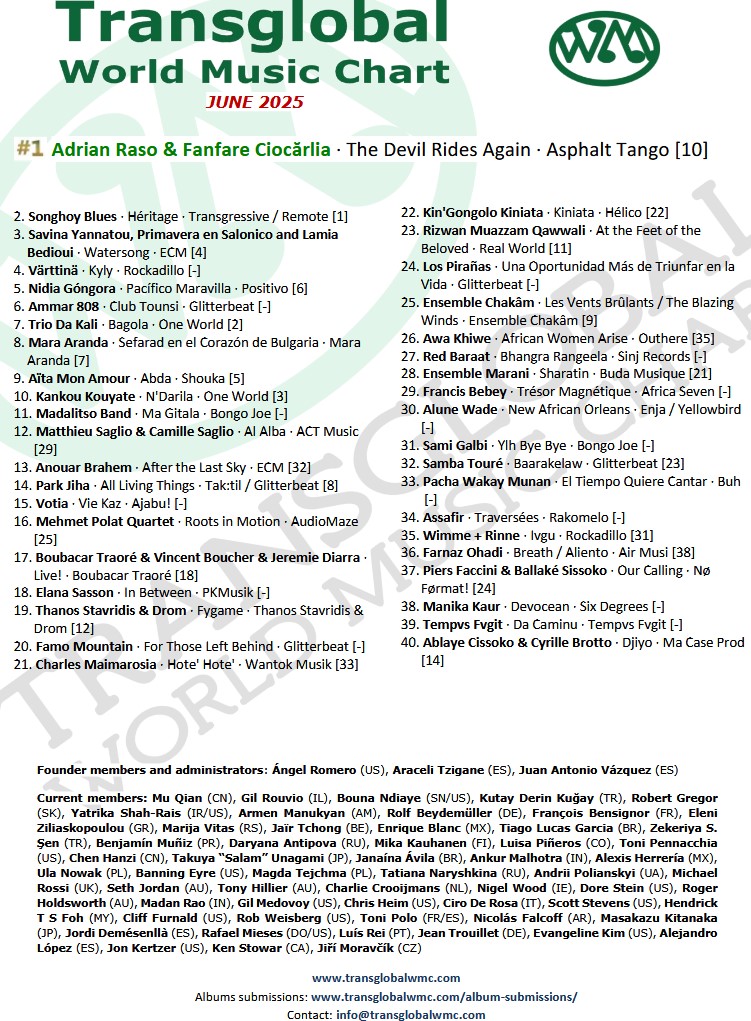
April 2025 Chart

twmc1

1. Trio Da Kali · Bagola · One World [2]


2. Samba Touré · Baarakelaw · Glitterbeat [1]
3. Songhoy Blues · Héritage · Transgressive / Remote [21]
4. Arat Kilo · Danama · Accords Croisés [18]
5. Park Jiha · All Living Things · Tak:til / Glitterbeat [14]
6. Rizwan Muazzam Qawwali · At the Feet of the Beloved · Real World [5]
7. Jupiter & Okwess · Ekoya · Airfono [9]
8. Ablaye Cissoko & Cyrille Brotto · Djiyo · Ma Case Prod [20]
9. Ensemble Chakâm · Les Vents Brûlants · Ensemble Chakâm [-]
10. Kankou Kouyate · N’Darila · One World [-]

11. Santrofi · Making Moves · Outhere [4]
12. Flook · Sanju · Flatfish [27]
13. Frigg · Dreamscapes · Bafe’s Factory [11]
14. Novalima · La Danza (Deluxe Version) · Six Degrees [16]
15. Aïta Mon Amour · Abda · Shouka [-]
16. Al Andaluz Project · The Songs of Iman Kandoussi: Traditional Arabic Andalusian · Galileo Music Communication [3]
17. Alsarah & The Nubatones · Seasons Of The Road · Alsarah & The Nubatones [-]
18. Damily & Toliara Tsapiky Band · Fihisa · Damily [-]
19. Aboubakar Traoré & Balima · Sababu · Zephyrus [7]
20. Ukandanz · Evil Plan · Compagnie 4000 [-]

21. Mulatu Astatke & Hoodna Orchestra · Tension · Batov [12]
22. L’Alba · Grilli · Buda Musique [13]
23. Ebo Taylor, Adrian Younge & Ali Shaheed Muhammad · Ebo Taylor JID022 · Jazz Is Dead [-]
24. Fanoos Ensemble · Echoes of Afghanistan · Fanoos Ensemble [34]
25. Kapela ze Wsi Warszawa / Warsaw Village Band & Bassałyki · Sploty / Twines · Karrot Kommando [6]
26. Muslim Shaggan · Asar · Honiunhoni [-]
27. Anne-Mari Kivimäki · Kotiin · Rockadillo [31]
28. Christine Zayed · Kama Kuntu · T-Rec [8]
29. Rastak · Tales of Earth and Sun · Rastak [-]
30. Rita Donte · Ritual · Ansonia [19]

31. L. Shankar · Full Moon · X DOT 25 Music [38]
32. Tatros Együttes · Pillanat · Tatros Együttes [-]
33. Gnonnas Pedro & His Dadjes Band · Roi de l’Agbadja Moderne 1974-1983 · Analog Africa [24]
34. Áššu · Luohtenlegut · Nordic Notes / CPL-Musicgroup [23]
35. Mario Lucio · Independance · Maremusica [26]
36. De Mar y Río · Bailen y Gocen · Palenque [-]
37. Piers Faccini & Ballaké Sissoko · Our Calling · Nø Førmat! [-]
38. Sauljaljui · Vaivaik · Wind Music [15]
39. Ozan Baysal · Tel ve Ten · ARC Music [-]
40. Okwy Osadebe and Highlife SoundMakers International · Music for Igbo Masquerade · Odogwu Entertainment / Palenque [-]

Download the chart as a PDF file

Founder members and administrators: Araceli Tzigane (ES), Juan Antonio Vázquez (ES), Ángel Romero (US)

Members: Ken Stowar (CA), Jiří Moravčík (CZ), Mu Qian (CN), Gil Rouvio (IL), Bouna Ndiaye (SN/US), Kutay Derin Kuğay (TR), Robert Gregor (SK), Yatrika Shah-Rais (IR/US), Armen Manukyan (AM), Rolf Beydemüller (DE), François Bensignor (FR), Eleni Ziliaskopoulou (GR), Marija Vitas (RS), Jaïr Tchong (BE), Enrique Blanc (MX), Tiago Lucas Garcia (BR), Zekeriya S. Şen (TR), Benjamín Muñiz (PR), Daryana Antipova (RU), Mika Kauhanen (FI), Luisa Piñeros (CO), Toni Pennacchia (US), Chen Hanzi (CN), Takuya “Salam” Unagami (JP), Janaína Ávila (BR), Ankur Malhotra (IN), Alexis Herrería (MX), Ula Nowak (PL), Liana Cisneros (PE), Banning Eyre (US), Magda Tejchma (PL), Tatiana Naryshkina (RU), Andrii Polianskyi (UA), Martin Webb (UK), Stanley Gazemba (KE), Seth Jordan (AU), Tony Hillier (AU), Charlie Crooijmans (NL), Nigel Wood (IE), Dore Stein (US), Roger Holdsworth (AU), Madan Rao (IN), Gil Medovoy (US), Chris Heim (US), Ciro De Rosa (IT), Scott Stevens (US), Hendrick T S Foh (MY), Cliff Furnald (US), Rob Weisberg (US), Toni Polo (FR/ES), Nicolás Falcoff (AR), Masakazu Kitanaka (JP), Jordi Demésenllà (ES), Rafael Mieses (DO/US), Luís Rei (PT), Jean Trouillet (DE), Evangeline Kim (US), Alejandro López (ES), Jon Kertzer (US)

The information for each album is displayed as follows:
#. Artist · Album Title · Label/Publisher… [Previous month’s chart position]
March 2025 Chart

twmc1

1. Samba Touré · Baarakelaw · Glitterbeat [2]


2. Trio Da Kali · Bagola · One World [-]
3. Al Andaluz Project · The Songs of Iman Kandoussi: Traditional Arabic Andalusian · Galileo Music Communication [1]
4. Santrofi · Making Moves · Outhere [-]
5. Rizwan Muazzam Qawwali · At the Feet of the Beloved · Real World [-]
6. Kapela ze Wsi Warszawa / Warsaw Village Band & Bassałyki · Sploty / Twines · Karrot Kommando [3]
7. Aboubakar Traoré & Balima · Sababu · Zephyrus [4]
8. Christine Zayed · Kama Kuntu · T-Rec [6]
9. Jupiter & Okwess · Ekoya · Airfono [-]
10. Mostar Sevdah Reunion · Bosa Mara · Snail [21]

11. Frigg · Dreamscapes · Bafe’s Factory [-]
12. Mulatu Astatke & Hoodna Orchestra · Tension · Batov [17]
13. L’Alba · Grilli · Buda Musique [16]
14. Park Jiha · All Living Things · Tak:til / Glitterbeat [-]
15. Sauljaljui · Vaivaik · Wind Music [7]
16. Novalima · La Danza (Deluxe Version) · Six Degrees [-]
17. Ensemble Chakâm · Les Vents Brûlants / The Blazing Winds · Ensemble Chakâm [-]
18. Arat Kilo · Danama · Accords Croisés [-]
19. Rita Donte · Ritual · Ansonia [-]
20. Ablaye Cissoko & Cyrille Brotto · Djiyo · Ma Case [-]

21. Songhoy Blues · Héritage · Transgressive [-]
22. Okwy Osadebe and Highlife SoundMakers International · Music for Igbo Masquerade · Odogwu Entertainment / Palenque [-]
23. Áššu · Luohtenlegut · Nordic Notes / CPL-Musicgroup [-]
24. Gnonnas Pedro & His Dadjes Band · Roi de l’Agbadja Moderne 1974-1983 · Analog Africa [-]
25. Toranj Quartet · Kowli Var · Liburia [19]
26. Mario Lucio · Independance · Maremusica [-]
27. Flook · Sanju · Flatfish [-]
28. Sudeshna Bhattacharya & Mosin Khan Kawa · Mohini · Motvind [-]
29. Mircan Kaya · Hudey · UCM Productions [-]
30. The Baltic Sisters · Värav / Vārti / Vartai · CPL-Music / CPL-Musicgroup [11]

31. Anne-Mari Kivimäki · Kotiin · Rockadillo [-]
32. The Bongo Hop · La Pata Coja · Underdog [10]
33. Karolina Węgrzyn · Oy Vesna Krasna · Karolina Węgrzyn [25]
34. Fanoos Ensemble · Echoes of Afghanistan · Fanoos Ensemble [-]
35. Vaudou Game · Fintou · Hot Casa [-]
36. Trancexpress · Trancexpress · Muzyka Zakorzeniona [-]
37. Cserepes · The Beginning of the Beginning: Africa Remix · Fonó [14]
38. L. Shankar · Full Moon · X DOT 25 Music [-]
39. Matachindé · Morir Cantando · Palenque [23]
40. Meybahar · Meybahar · Fonó [-]

Download the chart as a PDF file

Founder members and administrators: Ángel Romero (US), Araceli Tzigane (ES), Juan Antonio Vázquez (ES)

Members: Jon Kertzer (US), Ken Stowar (CA), Jiří Moravčík (CZ), Mu Qian (CN), Gil Rouvio (IL), Bouna Ndiaye (SN/US), Kutay Derin Kuğay (TR), Robert Gregor (SK), Yatrika Shah-Rais (IR/US), Armen Manukyan (AM), Rolf Beydemüller (DE), François Bensignor (FR), Eleni Ziliaskopoulou (GR), Marija Vitas (RS), Jaïr Tchong (BE), Enrique Blanc (MX), Tiago Lucas Garcia (BR), Zekeriya S. Şen (TR), Benjamín Muñiz (PR), Daryana Antipova (RU), Mika Kauhanen (FI), Luisa Piñeros (CO), Toni Pennacchia (US), Chen Hanzi (CN), Takuya “Salam” Unagami (JP), Janaína Ávila (BR), Ankur Malhotra (IN), Alexis Herrería (MX), Ula Nowak (PL), Liana Cisneros (PE), Banning Eyre (US), Magda Tejchma (PL), Tatiana Naryshkina (RU), Andrii Polianskyi (UA), Martin Webb (UK), Stanley Gazemba (KE), Seth Jordan (AU), Tony Hillier (AU), Charlie Crooijmans (NL), Nigel Wood (IE), Dore Stein (US), Roger Holdsworth (AU), Madan Rao (IN), Gil Medovoy (US), Chris Heim (US), Ciro De Rosa (IT), Scott Stevens (US), Hendrick T S Foh (MY), Cliff Furnald (US), Rob Weisberg (US), Toni Polo (FR/ES), Nicolás Falcoff (AR), Masakazu Kitanaka (JP), Jordi Demésenllà (ES), Rafael Mieses (DO/US), Luís Rei (PT), Jean Trouillet (DE), Evangeline Kim (US), Alejandro López (ES)

The information for each album is displayed as follows:
#. Artist · Album Title · Label/Publisher… [Previous month’s chart position]
February 2025 Chart

twmc1

1. Al Andaluz Project · The Songs of Iman Kandoussi: Traditional Arabic Andalusian · Galileo Music Communication [4]


2. Samba Touré · Baarakelaw · Glitterbeat [-]
3. Kapela ze Wsi Warszawa / Warsaw Village Band & Bassałyki · Sploty / Twines · Karrot Kommando [13]
4. Aboubakar Traoré & Balima · Sababu · Zephyrus [5]
5. Mari Boine · Alva · By Norse Music [1]
6. Christine Zayed · Kama Kuntu · T-Rec [7]
7. Sauljaljui · Vaivaik · Wind Music [-]
8. Justin Adams & Mauro Durante · Sweet Release · Ponderosa Music [2]
9. BaBa ZuLa · İstanbul Sokakları · Glitterbeat [3]
10. The Bongo Hop · La Pata Coja · Underdog [11]

11. The Baltic Sisters · Värav / Vārti / Vartai · CPL-Music / CPL-Musicgroup [-]
12. Moana & The Tribe · Ono · Black Pearl [9]
13. Nesrine · Kan Ya Makan · ACT Music [12]
14. Cserepes · The Beginning of the Beginning: Africa remix · Fonó [-]
15. Kanazoe, Clotilde Rullaud, Abdoulaye Traore, Boubacar Djiga, Achille Nacoulma · Kananayé · Tzig’Art [22]
16. L’Alba · Grilli · Buda Musique [18]
17. Mulatu Astatke & Hoodna Orchestra · Tension · Batov [31]
18. Gao Hong and Zhou Xiaoxia · Prelude to the Divine Realm · Naxos World [37]
19. Toranj Quartet · Kowli Var · Liburia [-]
20. Nusrat Fateh Ali Khan & Party · Chain of Light · Real World [6]

21. Mostar Sevdah Reunion · Bosa Mara · Snail [-]
22. Donja Jeka · Sunce te Gleda · Donja Jeka [-]
23. Matachindé · Morir Cantando · Palenque [-]
24. Buzz’ Ayaz · Buzz’ Ayaz · Glitterbeat [10]
25. Karolina Węgrzyn · Oy Vesna Krasna · Karolina Węgrzyn [-]
26. Lucibela · Moda Antiga · Lusafrica [15]
27. Kengo Saito / Japanistan Trio · Douce Errance · Felmay [28]
28. Djam! · Djam! · Guitar Globetrotter Recordings [35]
29. Ruşan Filiztek · Exils: De la Mésopotamie à L’Andalousie · Accords Croisés [14]
30. Seckou Keita · Homeland (Chapter 1) · Hudson [17]

31. Lo’Jo · Feuilles Fauves · Yotanka / Integral [25]
32. Afro Celt Sound System · Ova · Six Degrees [8]
33. Melón Jiménez & Lara Wong · Confluencias · Scatcat Music [29]
34. Jan Lundgren & Yamandu Costa · Inner Spirits · ACT Music [30]
35. V.A. · Super Disco Pirata: De Tepito para el Mundo 1965-1980 · Analog Africa [32]
36. Peter Somuah · Highlife · ACT Music [39]
37. Peni Candra Rini · Wani · New Amsterdam [33]
38. Seun Kuti & Egypt 80 · Heavier Yet (Lays the Crownless Head) · Record Kicks [19]
39. Dogo du Togo & The Alagaa Beat Band · Avoudé · We Are Busy Bodies [20]
40. Muriwai · Muriwai · Oro [-]

Download the chart as a PDF file

Founder members and administrators: Juan Antonio Vázquez (ES), Ángel Romero (US), Araceli Tzigane (ES)

Members: Alejandro López (ES), Jon Kertzer (US), Ken Stowar (CA), Jiří Moravčík (CZ), Mu Qian (CN), Gil Rouvio (IL), Bouna Ndiaye (SN/US), Kutay Derin Kuğay (TR), Robert Gregor (SK), Yatrika Shah-Rais (IR/US), Armen Manukyan (AM), Rolf Beydemüller (DE), François Bensignor (FR), Eleni Ziliaskopoulou (GR), Marija Vitas (RS), Jaïr Tchong (BE), Enrique Blanc (MX), Tiago Lucas Garcia (BR), Zekeriya S. Şen (TR), Benjamín Muñiz (PR), Daryana Antipova (RU), Mika Kauhanen (FI), Luisa Piñeros (CO), Toni Pennacchia (US), Chen Hanzi (CN), Takuya “Salam” Unagami (JP), Janaína Ávila (BR), Ankur Malhotra (IN), Alexis Herrería (MX), Ula Nowak (PL), Liana Cisneros (PE), Banning Eyre (US), Magda Tejchma (PL), Tatiana Naryshkina (RU), Andrii Polianskyi (UA), Martin Webb (UK), Stanley Gazemba (KE), Seth Jordan (AU), Tony Hillier (AU), Charlie Crooijmans (NL), Nigel Wood (IE), Dore Stein (US), Roger Holdsworth (AU), Madan Rao (IN), Gil Medovoy (US), Chris Heim (US), Ciro De Rosa (IT), Scott Stevens (US), Hendrick T S Foh (MY), Cliff Furnald (US), Rob Weisberg (US), Toni Polo (FR/ES), Nicolás Falcoff (AR), Masakazu Kitanaka (JP), Jordi Demésenllà (ES), Rafael Mieses (DO/US), Luís Rei (PT), Jean Trouillet (DE), Evangeline Kim (US)

The information for each album is displayed as follows:
#. Artist · Album Title · Label/Publisher… [Previous month’s chart position]

Transglobal World Music Festival Awards: 2024 Edition Results

As part of its goal to increase the appreciation of the music from the cultures of the world, as a tool for the development of people in many areas of life, as well as for joy and pleasure, the Transglobal World Music Chart launched at the end of 2017 a Festival Awards.

Here is the top 10 of the 2024 edition:

Transglobal World Music Festival Awards:
2024 Edition Results

Best Festival Award:
Folk Holidays

2024 TWMC Festival Awards Top 10:

1. Folk Holidays (CZ)
2. Jeonju Int’l Sori Festival (KR)
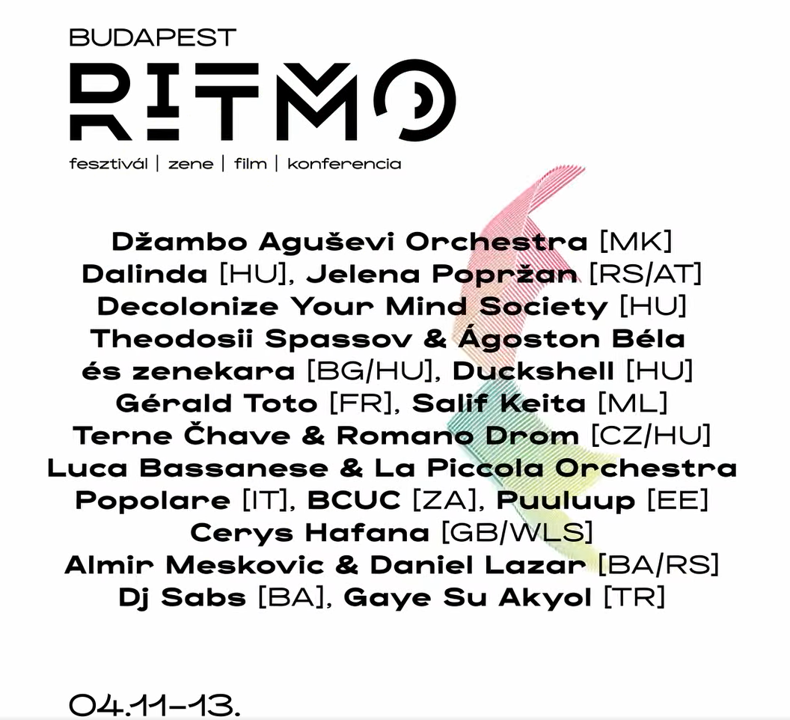
3. Budapest Ritmo (HU)
4. Ethnoport (PL)
5. Festival Arabesques (FR)
6. Fira Mediterrània de Manresa (ES)
7. Sukiyaki Meets The World (JP)
8. [tie] Førdefestivalen (NO) Alkantara Fest (IT)
10. World Music @ Taiwan (TW)

Thank you and congratulations to everyone. Thanks also to the evaluators, whose collaboration made this possible.

January 2025 Chart

twmc1

1. Mari Boine · Alva · By Norse Music [3]


2. Justin Adams & Mauro Durante · Sweet Release · Ponderosa Music [1]
3. BaBa ZuLa · İstanbul Sokakları · Glitterbeat [6]
4. Al Andaluz Project · The Songs of Iman Kandoussi: Traditional Arabic Andalusian · Galileo Music Communication [-]
5. Aboubakar Traoré & Balima · Sababu · Zephyrus [17]
6. Nusrat Fateh Ali Khan & Party · Chain of Light · Real World [2]
7. Christine Zayed · Kama Kuntu · T-Rec [-]
8. Afro Celt Sound System · Ova · Six Degrees [4]
9. Moana & The Tribe · Ono · Black Pearl [16]
10. Buzz’ Ayaz · Buzz’ Ayaz · Glitterbeat [5]

11. The Bongo Hop · La Pata Coja · Underdog [-]
12. Nesrine · Kan Ya Makan · ACT Music [-]
13. Kapela ze Wsi Warszawa / Warsaw Village Band & Bassałyki · Sploty / Twines · Karrot Kommando [-]
14. Ruşan Filiztek · Exils: De la Mésopotamie à L’Andalousie · Accords Croisés [13]
15. Lucibela · Moda Antiga · Lusafrica [7]
16. Jake Blount & Mali Obomsawin · Symbiont · Smithsonian Folkways Recordings [10]
17. Seckou Keita · Homeland (Chapter 1) · Hudson [11]
18. L’Alba · Grilli · Buda Musique [-]
19. Seun Kuti & Egypt 80 · Heavier Yet (Lays the Crownless Head) · Record Kicks [9]
20. Dogo du Togo & The Alagaa Beat Band · Avoudé · We Are Busy Bodies [-]

21. Manu Chao · Viva Tú · Because Music [14]
22. Kanazoe, Clotilde Rullaud, Abdoulaye Traore, Boubacar Djiga, Achille Nacoulma · Kananayé · Tzig’Art [-]
23. Trendafilka · For the Olives · Trendafilka [27]
24. Vigüela · We · Mapamundi Música [18]
25. Lo’Jo · Feuilles Fauves · Yotanka / Integral [8]
26. El Khat · Mute · Glitterbeat [12]
27. Carmen Souza · Port’Inglês · Galileo Music Communication [26]
28. Kengo Saito / Japanistan Trio · Douce Errance · Felmay [-]
29. Melón Jiménez & Lara Wong · Confluencias · Scatcat Music [-]
30. Jan Lundgren & Yamandu Costa · Inner Spirits · ACT Music [-]

31. Mulatu Astatke & Hoodna Orchestra · Tension · Batov [-]
32. V.A. · Super Disco Pirata: De Tepito para el Mundo 1965-1980 · Analog Africa [21]
33. Peni Candra Rini · Wani · New Amsterdam [33]
34. Ayom · Sa.Li.Va · Ayom / Believe [15]
35. Djam! · Djam! · Guitar Globetrotter Recordings [-]
36. Elektro Hafız · Style is Prison · Elektro Hafız [-]
37. Gao Hong and Zhou Xiaoxia · Prelude to the Divine Realm · Naxos World [-]
38. Amir Amiri Ensemble · Adad / Ancestors: Echoes of Persia · Fifth House [34]
39. Peter Somuah · Highlife · ACT Music [-]
40. Driss El Maloumi Trio & Watar Quintet · Details · Contre Jour / Zig Zag World [24]

Download the chart as a PDF file

Founder members and administrators: Araceli Tzigane (ES), Juan Antonio Vázquez (ES), Ángel Romero (US)

Members: Evangeline Kim (US), Alejandro López (ES), Jon Kertzer (US), Ken Stowar (CA), Jiří Moravčík (CZ), Mu Qian (CN), Gil Rouvio (IL), Bouna Ndiaye (SN/US), Kutay Derin Kuğay (TR), Robert Gregor (SK), Yatrika Shah-Rais (IR/US), Armen Manukyan (AM), Rolf Beydemüller (DE), François Bensignor (FR), Eleni Ziliaskopoulou (GR), Marija Vitas (RS), Jaïr Tchong (BE), Enrique Blanc (MX), Tiago Lucas Garcia (BR), Zekeriya S. Şen (TR), Benjamín Muñiz (PR), Daryana Antipova (RU), Mika Kauhanen (FI), Luisa Piñeros (CO), Toni Pennacchia (US), Chen Hanzi (CN), Takuya “Salam” Unagami (JP), Janaína Ávila (BR), Ankur Malhotra (IN), Alexis Herrería (MX), Ula Nowak (PL), Liana Cisneros (PE), Banning Eyre (US), Magda Tejchma (PL), Tatiana Naryshkina (RU), Andrii Polianskyi (UA), Martin Webb (UK), Stanley Gazemba (KE), Seth Jordan (AU), Tony Hillier (AU), Charlie Crooijmans (NL), Nigel Wood (IE), Dore Stein (US), Roger Holdsworth (AU), Madan Rao (IN), Gil Medovoy (US), Chris Heim (US), Ciro De Rosa (IT), Scott Stevens (US), Hendrick T S Foh (MY), Cliff Furnald (US), Rob Weisberg (US), Toni Polo (FR/ES), Nicolás Falcoff (AR), Masakazu Kitanaka (JP), Jordi Demésenllà (ES), Rafael Mieses (DO/US), Luís Rei (PT), Jean Trouillet (DE)

The information for each album is displayed as follows:
#. Artist · Album Title · Label/Publisher… [Previous month’s chart position]